Home / Buying Guides / Soldering microscopes and lab bench tools under $300
Buying guide · updated 2026-10-10 · The Real Deal Meter team
Soldering microscopes and lab bench tools under $300 compared

These three share a shelf, not a job. The TOMLOV TM4K-AF Max is a digital microscope for soldering and electronics repair; the stirrer and the oven are sample-prep tools, one for mixing and heating liquids, the other for drying parts, glassware or samples in hot air. Decide which bench you are equipping before you compare anything, because none of them does another's work.
| Product | Price | ||
|---|---|---|---|
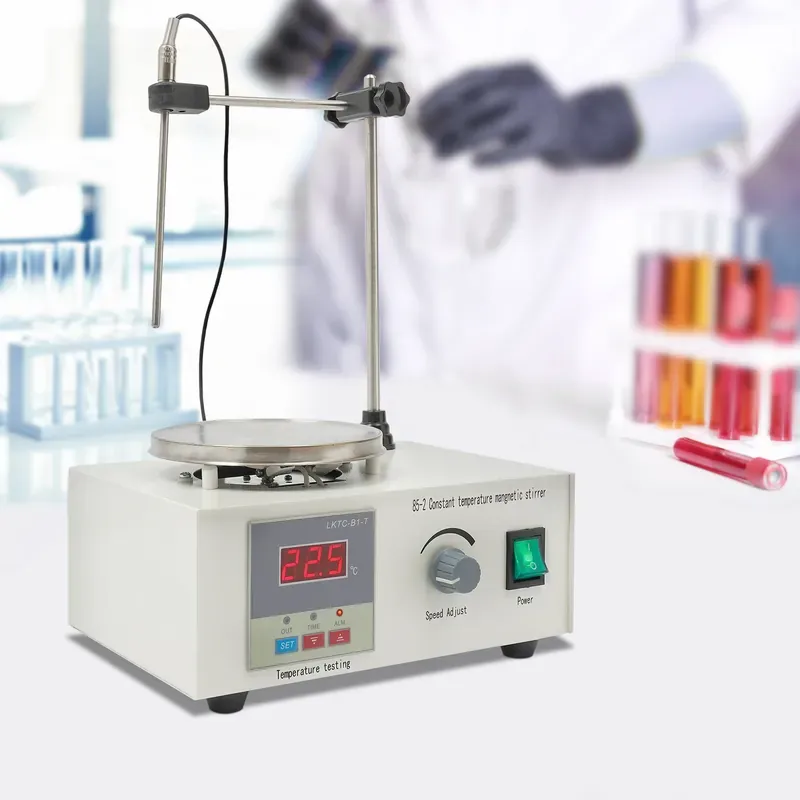
| For mixing warm liquids | Magnetic Stirrer with Temperature Control and Variable Speed A hot-plate stirrer from a store that names no brand; the listing promises precise temperature control and stepless speed for mixing liquids. Its title does not say whether it controls the plate's temperature or the liquid's, so ask whether a probe is included. 11 checks since Sep 30 · low $39.26 | ||
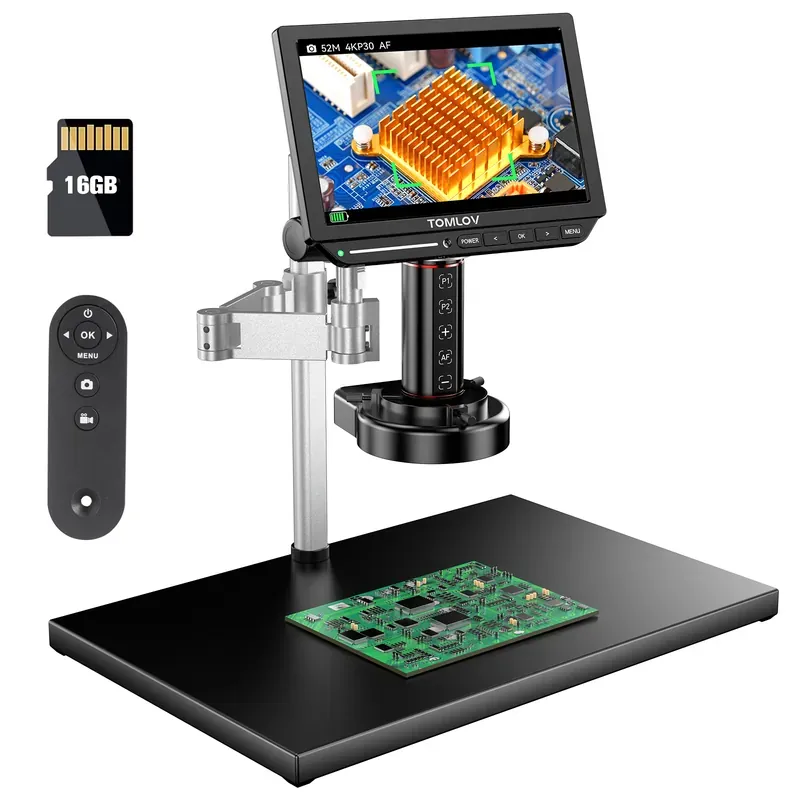
| Pick for soldering and repair | TOMLOV TM4K-AF Max 4K Autofocus Digital Microscope, 10.1" TOMLOV lists 4K (3840 × 2160) video, TOF-sensing autofocus, simultaneous HDMI and USB output, a ring light and a 360° arm on a 13-inch pillar. Its page gives no working distance or frame rate, and the built-in 10.1-inch screen is 1280 × 800. 15 checks since Sep 26 · low $247.34 | ||
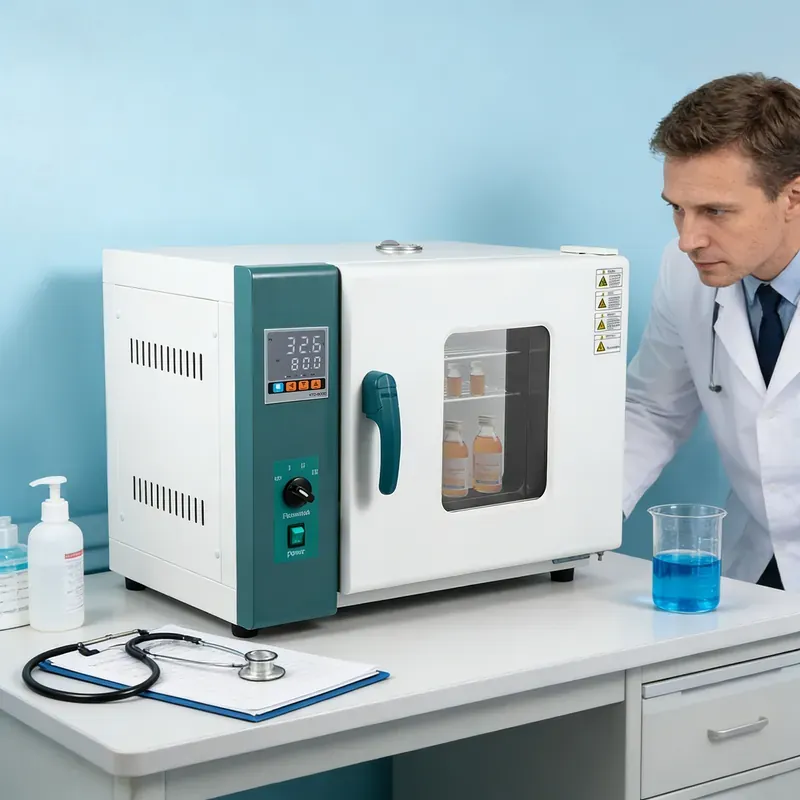
| For drying, not solvents | Horizontal Electric Blast Drying Oven, 1000W 45L Stainless Steel The listing claims a 1000 W, 45-liter (12-gallon) stainless-steel “blast”, or forced-air, drying oven with a temperature controller, and also calls it a thermostatic incubator box. Its title names no maker and no rating for drying flammable materials. 12 checks since Sep 28 · low $283.82 |
Prices last checked 2026-10-10. Each one is re-checked daily and this table is rebuilt when any of them moves.
Paid links · We may earn a commission if you buy through them.A repair bench or a prep bench
The TOMLOV is an electronics tool. TOMLOV sells the TM4K-AF Max for repair work, on a 360° arm with a ring light and eight DIY grid lines that it says help accuracy in soldering 1.
The other two prepare samples. Labs use electrically heated ovens to dry samples and glassware 2. A blast is a stream of air forced through a hole 3; in a drying oven that means forced convection, in which a fan speeds up heat transfer and air exchange and evens out the temperature inside 4. Labs use hot plates to heat solutions to 100 °C or more where a steam bath, the safer heat source, will not do, and combined stirrer/hot plates come from many brands 2; this listing sells its stirrer for liquid mixing.
If your work is soldering, neither lab tool helps. If it is mixing or drying, the microscope does not.
- TOMLOV 4K Autofocus Microscope TM4K-AF Max, 10.1" Spin Flex Arm for Repair TOMLOV (official store) — Page title ends “Spin Flex Arm for Repair”. Bullets: “Micro soldering microscope offers 360° rotation and horizontal adjustment for precise work”; “Illuminate your work with the TOMLOV TM4K-AF Max Digital Microscope's brilliant ring light”; “It includes a locate feature for precise navigation and 8 DIY grid lines to enhance accuracy in soldering”. Read October 10, 2026.
- Prudent Practices in the Laboratory: Handling and Management of Chemical Hazards, Updated Version (2011), Chapter 7: Working with Laboratory Equipment National Research Council (National Academies Press) — 7.C.5.1 Ovens (p. 156): “Electrically heated ovens are commonly used in the laboratory to remove water or other solvents from chemical samples and to dry laboratory glassware.” 7.C.5.2 Hot Plates (p. 157): “Laboratory hot plates are often used when solutions are to be heated to 100 °C or higher and the inherently safer steam baths cannot be used as the source of heat.”; “On many brands of combined stirrer/hot plates, ...”
- Blast (noun) Merriam-Webster — Noun, sense 3a: “a stream of air or gas forced through a hole”.
- Drying ovens and heating ovens Memmert — “A drying oven or heating oven is usually available either with natural convection or forced convection.” “In the version with forced convection, heat transfer (convection) and air exchange are accelerated via a switchable fan, ... thus promoting homogenous temperature distribution in the interior.”
What 4K and 2000X do not tell you
TOMLOV's 4K belongs to the camera. It lists 4K UHD video at 3840 × 2160 and 52MP photos, shown on a 10.1-inch screen of 1280 × 800 1: about an eighth of the pixels in one 4K frame. TOMLOV calls the sensor 4K and does not say how it produces 52-megapixel photos 1. More megapixels make larger images, but image quality also depends on the optics and the sensor 2.
The 2000X is the top of a 2X-to-2000X zoom range that includes 4X of digital zoom 1. Digital zoom enlarges the image after it is captured and reveals no more detail 2, and on-screen magnification is the monitor's width divided by the width of the object filling it, so a bigger screen gives a bigger number 3. Magnifying past what the optics can resolve is what microscopists call empty magnification: the image grows with no more detail 4.
For soldering, the numbers that matter are working distance and frame rate, and TOMLOV's page gives neither 1. Electronics repair often needs generous working distance, 4K imaging may run at a lower frame rate, and when you are moving tools under the lens, frame rate may matter more than resolution 5.
- TOMLOV 4K Autofocus Microscope TM4K-AF Max, 10.1" Spin Flex Arm for Repair TOMLOV (official store) — “Experience 4K UHD 3840X2160P quality with a high-speed 4K sensor.”; “Enjoy 4K UHD video and 52MP images on a 1280 x 800P IPS screen”; “Effortlessly zoom from 2X to 2000X”; “Achieve up to 2000X magnification with 4X digital zoom, plus HDMI and USB output support.” The page, and the product data behind it (updated October 10, 2026), gives no frame rate, working distance or focus range and does not explain how 52MP photos are produced. Read October 10, 2026.
- The Complete Guide to Buying a Digital Microscope Microscope World (July 10, 2026) — “Digital zoom simply enlarges the image after it has been captured. It does not reveal additional detail.”; “Higher megapixel ratings generally produce larger images, but image quality also depends on the optics and sensor.”
- How Magnification of Digital Microscopes is Calculated Microscope World (December 3, 2025) — Magnification “is calculated based on the size of the monitor being used”; “On-Screen Magnification = Width of Monitor ÷ Width of the Object Spanning the Screen”.
- Useful Magnification Range Nikon's MicroscopyU — “Exceeding the limit of useful magnification causes the image to suffer from the phenomenon of empty magnification ... where increasing magnification through the eyepiece or intermediate tube lens only causes the image to become more magnified with no corresponding increase in detail resolution.”
- How to Choose a Digital Microscope for Industrial Inspection: Sensor Size, Frame Rate, and Optics Compared Microscope World (May 8, 2026) — “Applications like electronics repair and assembly inspection often require generous working distance.” Under frame rate vs resolution trade-offs: “4K imaging may operate at lower FPS”; “If live manipulation and real-time viewing are critical, frame rate may matter more than ultra-high resolution.”
Before you heat anything
Ask what the temperature control controls. On SCILOGEX's SCI500HS Pro, a lab model, liquid temperature control works with a connected PT1000 sensor, and the spec sheet lists overheating protection and a “Hot” warning that flashes above 50 °C even when off 1. This listing's “precise temperature control” does not say of what, so ask whether a probe comes with it. If one does, clamp it in the liquid: if it falls out, the controller keeps heating until the sensor reaches the setting 2. On many stirrer/hot plates the stirring and heating controls are hard to tell apart, and raising heat instead of speed can cause a fire or explosion 2. A hot plate's surface can reach 350 °C, hot enough to ignite many low-boiling solvents, so never heat diethyl ether, pentane, hexane or acetone on one in an open vessel 3.
The oven's rule is no solvents. A National Research Council lab-safety handbook says to buy ovens with heating elements and controls separated from the chamber air, that household ovens usually lack this, and that vapors can form explosive mixtures inside 2. Binder, a lab-oven maker, says ovens that dry flammable materials must meet safety standards 4. Without that, rinse solvent-washed glassware with distilled water before it goes in 2.
- SCILOGEX SCI500HS-Pro LCD Digital 10x10 Magnetic Hotplate Stirrer 500°C/1500rpm Max. SCILOGEX — “Max. heating plate temperature 500°C”; “Liquid temperature control is possible by connecting the temperature sensor (PT1000) with an accuracy at ±0.2°C.”; spec table “Overheating Protection(°C): 540”; “The “Hot” warning will flash when the work plate temperature is above 50°C even when the hotplate is turned off.”
- Prudent Practices in the Laboratory: Handling and Management of Chemical Hazards, Updated Version (2011), Chapter 7: Working with Laboratory Equipment National Research Council (National Academies Press) — 7.C.5 (p. 156): “Temperature-sensing devices absolutely must be securely clamped or firmly fixed in place, maintaining contact with the object or medium being heated at all times. If the temperature sensor for the controller is not properly located or has fallen out of place, the controller will continue to supply power until the sensor reaches the temperature setting, creating an extremely hazardous situation.” 7.C.5.2 Hot Plates (p. 157): “On many brands of combined stirrer/hot plates, the controls for the stirrer and temperature control are not easily differentiated. A fire or explosion may occur if the temperature rather than the stirrer speed is increased inadvertently.” 7.C.5.1 Ovens (pp. 156–157): “Purchase or construct laboratory ovens with their heating elements and their temperature controls physically separated from their interior atmospheres.”; “Small household ovens and similar heating devices usually do not meet these requirements and, consequently, should not be used in laboratories.”; “The volatilized substances may also be present in sufficient concentration to form explosive mixtures with the air inside the oven”; “To avoid explosion, do not dry glassware that has been rinsed with an organic solvent in an oven until it has been rinsed again with distilled water.”
- 1.4E: Hotplates (Organic Chemistry Lab Techniques) Lisa Nichols, Butte College, via Chemistry LibreTexts (CC BY-NC-ND 4.0) — “Safety note: the hotplate surface can reach temperatures up to 350 °C, which is hot enough to ignite many low-boiling solvents.”; “Diethyl ether, pentane, hexane, low-boiling petroleum ether, and acetone should therefore never be heated in an open vessel with a hotplate.”
- Drying and tempering (BINDER heating chambers) BINDER — “For example, an oven used to dry flammable materials must comply with safety standard specifications.”
What these prices mean
Each price here is the one we last checked on that product’s own page, and each page says the date. All three are AliExpress listings: AliExpress quotes new accounts a lower “Welcome deal” price and runs store coupons on top, so you may be shown less than we list. The struck-through figures are the sellers’ own, claiming 56% to 74% off, and we have not seen any of them charged. The TOMLOV dropped from $253.14 to $247.51 on October 1, 2026 and has crept back to $247.84; the stirrer went from $39.31 to $40.58 on October 8; the oven has moved by cents.
TOMLOV sells the TM4K-AF Max in its own store too, where it listed it at $359.99 on October 10, 2026 1.
- TOMLOV 4K Autofocus Microscope TM4K-AF Max, 10.1" Spin Flex Arm for Repair TOMLOV (official store) — $359.99 (compare-at $369.99), SKU THLZH1850, read 2026-10-10
Prices are what we last checked on each product's own page — follow a link for the current price and the date it was verified. Every outbound link here is an affiliate link; see Disclosure.
More buying guides → See every checked deal →© 2026 Real Deal Meter · Quote us with a link back · Copyright & reuse